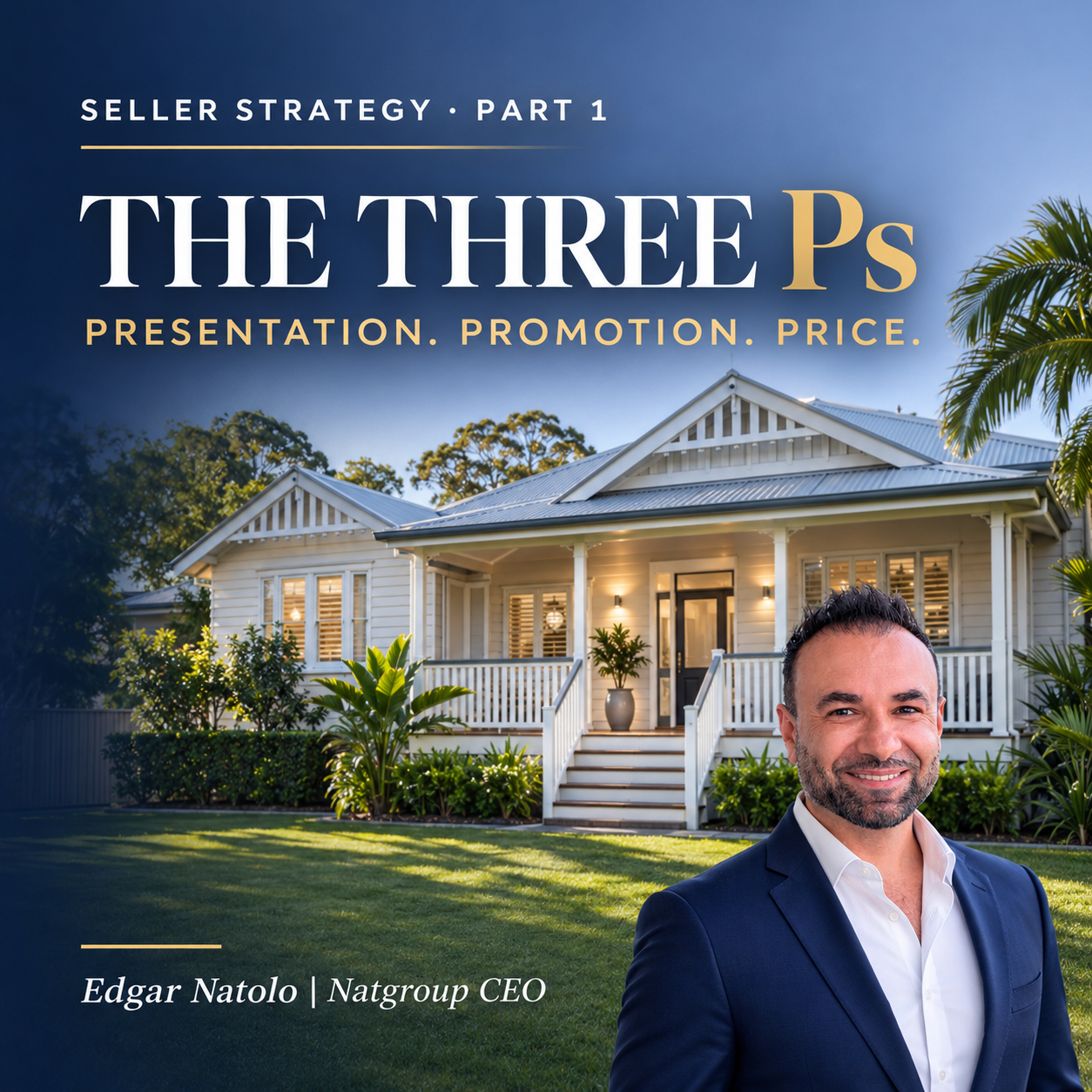
Illustrative property image; not an actual listing.
Three decisions that work together
Before blaming a slow market for a property that has not sold, Edgar Natolo asks owners to examine presentation, promotion and price. Edgar, CEO and founder of Natgroup, began his real estate career in 1991 and established the business in 1997. Across the Gold Coast, Logan and Brisbane, he has seen these fundamentals influence sales through busy and quieter markets.
Presentation shapes a buyer’s impression. Promotion determines who sees the property and whether they want to inspect. Price positions the home against its competition. Edgar’s advice is to review all three together rather than assume a larger advertising budget or a lower price will solve every problem.
Presentation: remove the buyer’s to-do list
A property that needs work may appeal to an experienced renovator. Another buyer may see appointments with painters, electricians and flooring installers, plus uncertainty about time and cost. That hesitation can affect their offer.
Edgar and Brett are professional renovators who have renovated 42 properties together. Edgar also project manages cosmetic renovations for owners preparing to sell or lease. He looks for improvements that change how the property feels, with the cost considered against its likely benefit.
One recent long-term rental was refreshed with Dulux Casper White paint, new white vents and switch covers, fresh carpet and modern fans. An old intercom was removed; grout, silicone and water damage around vanities were repaired; door handles were updated. The garage, outside tiles, concrete fence, poolside deck and pontoon also received attention.
The combined effect was to remove a long list of jobs a buyer would otherwise have needed to organise. The lesson is to identify the visible issues that create hesitation and assess which are worth addressing before the first inspection.
Promotion: explain why the home deserves an inspection
Dark photographs, unhelpful angles and missing images can discourage buyers. Without a floorplan or measurements, a buyer may struggle to understand whether the layout will suit them. Accurate photographs and useful information help buyers make that decision.
The description should explain more than bedrooms and bathrooms. Edgar encourages owners to show how the home works and what makes everyday life in the street and neighbourhood appealing. The inspection should confirm the impression created online.
Photography, video, drone footage, online advertising, brochures, social campaigns, SMS and direct database contact all have possible roles. The choice should reflect the home and its likely buyers. Ask who the campaign will reach, how those people will be found and how enquiries will be followed up.
Price: position the home where buyers are looking
Strong preparation and promotion can support a price, but buyers still compare alternatives. Even an outstanding home can remain unsold when the asking price exceeds what buyers are prepared to pay.
If the relevant buyer pool is searching between $750,000 and $800,000, a property positioned at $850,000 to $900,000 may sit outside that audience. These figures illustrate search positioning, rather than value a particular property.
Edgar describes the difference as being on the market versus in the market: advertised for sale, or positioned where active buyers will seriously consider it. No inspections is feedback worth investigating alongside views, enquiries and comparable sales.
Review all three before changing the campaign
When a campaign stalls, examine the whole picture. Does the home present well? Does the marketing show it accurately and reach suitable people? Does the price make sense against competing properties?
The agent should explain which change is recommended, the evidence behind it and the response it is intended to produce. The three Ps give owners and agents specific decisions they can review and improve.
Read Edgar’s personal perspective on the three Ps
Read the complete seller guide
More property insights